Schools & Education
Savannah Tech launches 12-week drone-operator program with Unmanned Safety Institute
Starting Oct. 26, the hybrid training fits around warehouse and trucking shifts and leads to the FAA Part 107 license needed for paid drone work.
By Staff · October 9, 2026
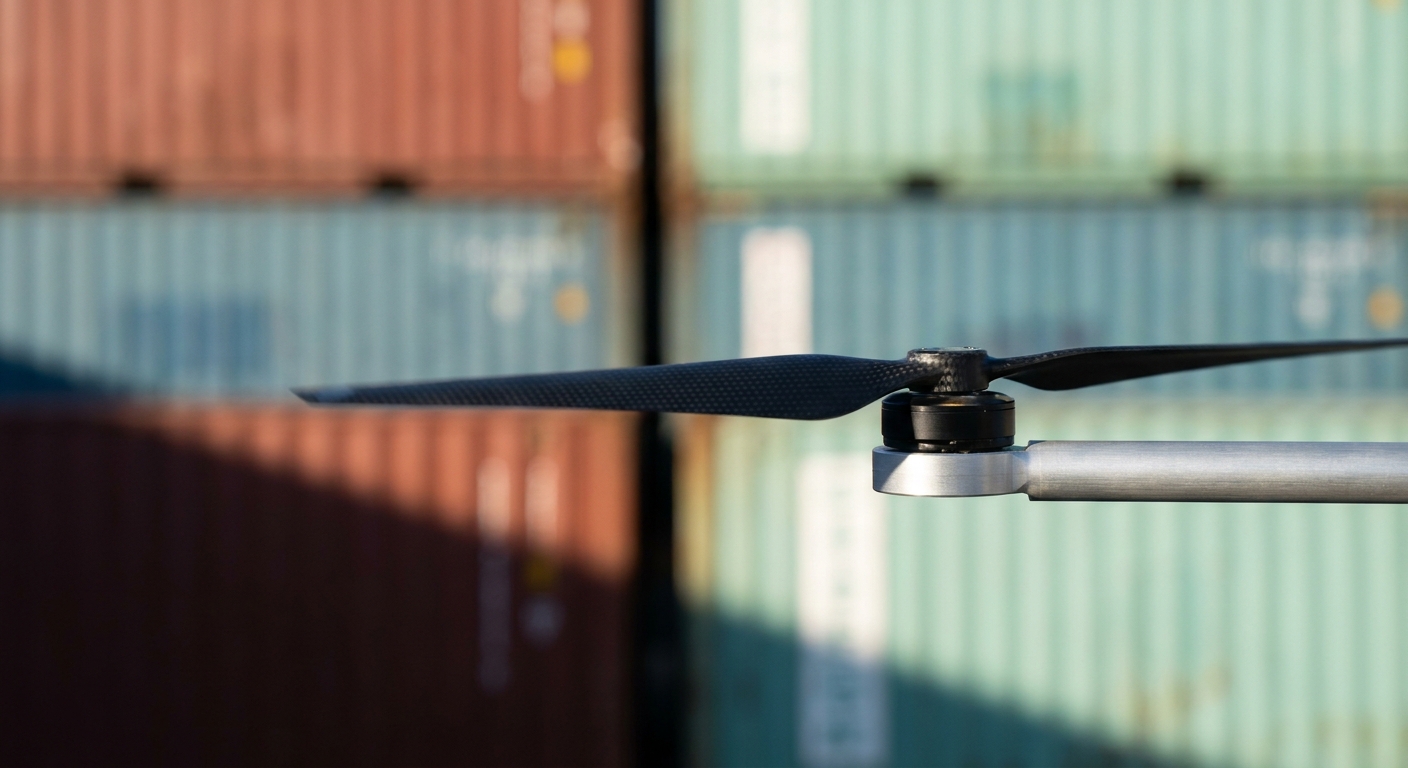
The 34 ship-to-shore cranes at Garden City Terminal don't stop, and neither do the 14,000 to 16,000 trucks that roll through the gates on a working day. Savannah Technical College is betting the next hire on that waterfront could be someone who flies, not just someone who drives a forklift — and it has built a three-month on-ramp for the people already working those docks and warehouses.
The college and the Unmanned Safety Institute announced Sept. 22 a 12-week Professional Remote Operator program that begins Oct. 26, combining preparation for the Federal Aviation Administration's Part 107 Remote Pilot Certificate with USI Safety Level 3 ground school, Safety Level 4 hands-on flight training and a Savannah Technical College certificate of completion. The public can see the gear before deciding: a demonstration runs Thursday, Oct. 8, from 10 a.m. to noon at the Crossroads Campus, 190 Crossroads Parkway.
"This partnership with USI gives students and working professionals access to high-quality, industry-aligned drone training without requiring them to leave the region," said Tal Loos, vice president for economic development at Savannah Technical College. The hybrid format — online ground school with hands-on flight training — is built for someone fitting school around a warehouse or trucking shift rather than the other way around. "The industries driving Coastal Georgia are changing quickly, and our responsibility is to make sure our workforce is ready," Loos said.
The credential
The certificate at the center is the FAA Part 107 Remote Pilot Certificate — the federal license required to fly a drone under 55 pounds for paid or commercial work. There's no college prerequisite, and you can pursue it from age 16.
Earning it means passing the FAA's Unmanned Aircraft General – Small knowledge test, 60 multiple-choice questions with a 70 percent passing score, at an FAA-approved testing center. Figure roughly $175 per attempt for the test and $5 for drone registration, good for three years. That license, plus the logged flight time and the certificate, is the whole 12 weeks — no two-year associate's degree or four-year degree sits between a student and the license.
"It's another way Savannah Tech is turning emerging technology into real economic opportunity," Loos said.
Where the jobs are
The pitch points at the docks for good reason. Georgia's ports supported about 609,197 full- and part-time jobs and $171 billion in annual sales in fiscal year 2025 — roughly 12 percent of statewide economic output — and the Port of Savannah moved 5.7 million twenty-foot-equivalent containers that year. Chatham County alone accounts for about 77,732 port-supported jobs. The field is growing, too: the FAA counted about 493,000 certificated remote pilots in December 2025, more than 70,000 above the year before, and projects roughly 628,600 by 2030. [n-faa1] [n-faa2]
But the waterfront itself is more cautious, at least for now. Georgia Ports Authority rules permit only the authority's authorized employees or contractors who hold FAA pilot certificates to fly over its terminals, and current Savannah-area Part 107 job postings cluster in surveying, insurance inspection and agriculture rather than port or warehouse work. [f-gpa1] [f-gpa2] [f-job1] [f-job2]
On pay, the program sponsor's own career guide lists national medians of about $50,000 for surveying and mapping technicians, $75,000 to $90,000 for some technical roles, and $113,080 for commercial pilots — a figure worth reading as the industry's pitch, not a government statistic. [f-pay]
See it and price it
Savannah Tech's program page does not yet list tuition; it says registration information, tuition and cohort dates "will be announced" through the college's Economic Development division, which takes pricing, eligibility and enrollment calls at 912-443-3012. [f-v2]
USI's own 12-week program lists a $4,500 sticker price, and students should figure in the roughly $175 FAA knowledge-test fee and $5 drone registration on top of whatever Savannah Tech sets. The way to judge it in person is Thursday's demo, billed as "Unmanned Aircraft Systems Demo Day" in the college's events listing — logistics, not hobby flying. [f-patch]
The demo is Thursday; the first cohort runs 12 weeks starting Oct. 26. Whether the waterfront's job boards start asking for a Part 107 is the question this program is betting on.